Lean in hospitals: simulation as the missing component
Lean improves hospital processes, but a whiteboard cannot reveal every weakness. Explore how in-situ simulation can make Lean projects more realistic and support safer implementation.
Since 2005 • Over 25,000 participants trained • ERC course centre • DFP/ÖGKV PFP approved (Austria) • Austrian Patient Safety Award 2025 • HRO-Award 2025
Since 2005 · ERC centre · Award-winning
Practical, evidence-informed articles, available free of charge, for hospitals, medical practices and primary care centres — focusing on patient safety, team training and structured emergency preparedness.

Lean improves hospital processes, but a whiteboard cannot reveal every weakness. Explore how in-situ simulation can make Lean projects more realistic and support safer implementation.

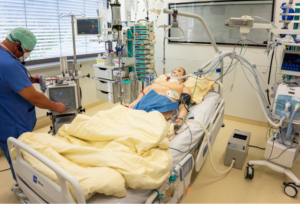
ECMO is infrequent, complex and dependent on teamwork. Explore how integrated simulation complements technical training and supports patient safety, drawing on ELSO’s 2025 training guideline.

Five practical lessons for primary care centre founders: safer processes, clear roles and a well-prepared launch, informed by the Austrian Patient Safety Award 2025.

Explore emergency team training frequency through the 2025 ERC Guidelines, research on skill retention and a practical three-level training model for hospitals.

Clinical knowledge is only part of emergency care. Five common communication errors illustrate the role of Crisis Resource Management, closed-loop communication and in-situ training in patient safety.

In-situ simulation brings training to the clinical workplace. This article compares it with simulation centre training and discusses when each approach may be most useful.

Emergencies are infrequent in medical practices, which makes preparation essential. Explore why equipment alone is not enough and how on-site team training can support the response.